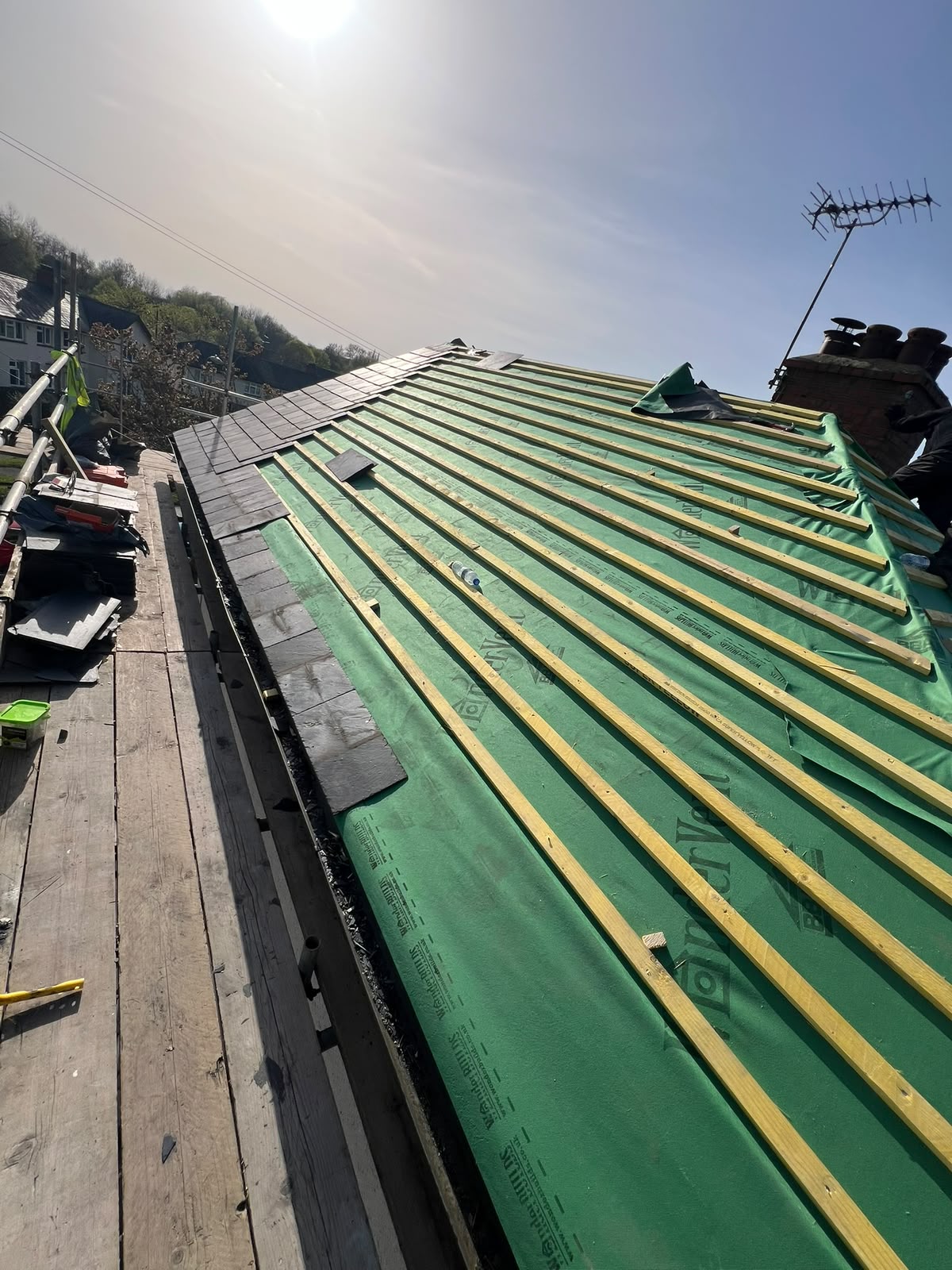
From a single slipped tile to storm damage across an entire elevation, our experienced roofers diagnose the real cause of your problem and fix it properly — so it stays fixed.
Roof problems rarely fix themselves — and the longer you leave them, the more expensive they become. What starts as a small leak around a cracked tile can quickly lead to saturated rafters, damaged plasterwork, ruined insulation, and even structural timber decay. At Dripstop Roofing, we have been carrying out roof repairs across Slough, Reading, Windsor, Maidenhead, and the wider Berkshire area since 2020, and we have seen first-hand how a £200 repair left unattended can turn into a £5,000 problem.
Our approach to roof repairs is simple: find the actual cause, not just treat the symptom. Water is deceptive — it can enter at a ridge tile three metres away from where the damp patch appears on your bedroom ceiling. That is why every repair starts with a proper inspection, either from a ladder, from scaffolding, or using our drone survey equipment. We check tiles, flashings, valleys, mortar, felt underlay, and ventilation before we touch a single tile.
We carry stock of the most common tile profiles — Redland 49, Marley Modern, Marley Ludlow Major, and standard concrete plain tiles — so most repairs can be completed on the same day as the inspection. For less common or discontinued tiles, we source from specialist reclamation suppliers and usually have replacements within 48-72 hours.
Get a Free Quote
What We Offer
Re-bedding, re-fixing, and replacing cracked, slipped, or blown-off tiles and slates across all common UK tile profiles and fixing methods.
Systematic tracing of water ingress from entry point to damage point — we fix the actual cause, not just the visible symptom.
Removal of deteriorated sand-and-cement mortar and re-bedding with a modern 1:3 mix, or conversion to a dry-fix ridge system for a permanent solution.
Replacement of cracked lead valleys, re-lining with Code 4 or Code 5 lead sheet, and repair of damaged box gutters and parapet walls.
Replacement of lead, zinc, or mortar flashings around chimneys, abutments, soil pipes, and roof windows using LSA-standard lead detailing.
For common tile repairs, we often complete the work on the same day as inspection — minimising disruption and preventing further water damage.
Understanding what has gone wrong with your roof is the first step to getting it fixed properly. Here are the most common problems we see on residential properties across Berkshire, Surrey, and Greater London — and what causes them.
Slipped or missing tiles are the single most common issue. On older roofs where tiles were nail-fixed to softwood battens, the nails corrode over time (especially in the damp Thames Valley climate) and tiles gradually work loose. High winds then lift them out of position. Modern BS 5534 requires mechanical fixing of every tile — clips, nails, or both — precisely to prevent this.
Deteriorated ridge mortar is almost universal on roofs over 25-30 years old. The sand-and-cement mix used to bed ridge tiles is exposed to freeze-thaw cycling every winter, and it gradually cracks and crumbles. Once the mortar fails, ridge tiles become loose and water enters directly into the roof space. The modern solution is a dry-fix ridge system (such as Redland DryVent or Klober Profile-Line) which uses mechanical clips and a roll-out ventilated ridge — no mortar to deteriorate.
Failed flashings around chimneys are another frequent culprit. Lead flashings should last 80-100+ years, but cheap lead substitutes (lead-effect tape, mortar fillets, or bituminous flashing strip) fail within 5-15 years. If your chimney flashing is anything other than proper Code 4 or Code 5 lead sheet dressed into stepped chases, it is a ticking time bomb.
Not every roof problem is an emergency, and understanding the difference can save you money. A genuine roofing emergency is one where water is actively entering your living space, or where structural damage creates a safety risk — a large section of tiles blown off in a storm, a fallen tree branch through the roof, or a complete ridge collapse.
In these situations, you need a roofer who can attend within hours to make the property weathertight. Dripstop Roofing offers a rapid-response emergency service across Berkshire and the Home Counties — call us on 07405 391861 and we will get someone to you as quickly as possible.
A scheduled repair, on the other hand, is one where the problem exists but is not causing immediate water ingress — a cracked tile that has not yet leaked, mortar starting to crumble on ridge tiles, or moss build-up affecting drainage. These still need attention, but they can be planned in for a convenient date, often at a lower cost since we can batch multiple small repairs together in one visit.
We understand the temptation to get up on the roof and fix a problem yourself — especially when it looks like just one tile needs replacing. But we strongly advise against it, for three important reasons.
Catching roof problems early saves money and prevents interior damage. Here are the warning signs every homeowner in Berkshire and Surrey should watch for, ideally checked twice a year — once in autumn before the wet season, and once in spring to assess any winter damage.
From ground level, look for tiles that appear displaced, cracked, or missing. Check the mortar along the ridge line — any gaps, cracks, or loose-looking ridge tiles need attention. Look at the lead flashings around your chimney and any roof-wall abutments — lifting, cracking, or green oxidation staining on brickwork below the flashing indicates a problem.
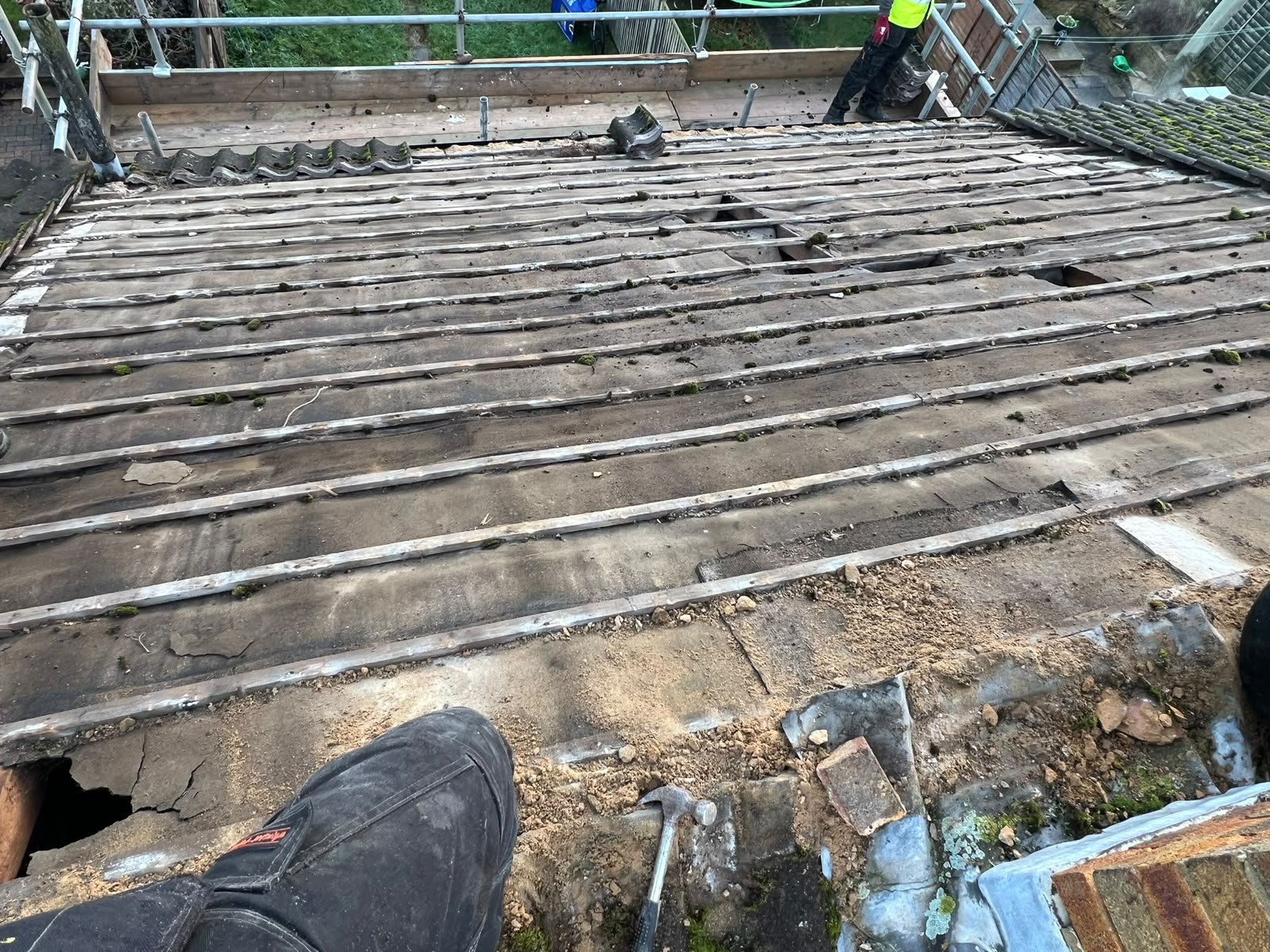
Inside your loft space (if accessible), look for daylight showing through the tiles — this indicates slipped or broken tiles. Check for damp patches on the underside of the felt or membrane, water staining on timbers, and any musty smell that suggests persistent moisture. Pay particular attention to areas around the chimney stack, valleys, and any roof penetrations like soil vent pipes or Velux windows.
How It Works
Call us on 07405 391861 or fill in our online form. Describe the issue — photos are helpful but not essential. We will arrange an inspection at a time that suits you.
We examine your roof from the outside (ladder, scaffolding or drone) and inside (loft space) to identify the exact cause and extent of the problem.
We explain what we have found, provide a fixed price for the repair, and — if it is a common issue — can often complete the work the same day.
We photograph the completed repair for your records, clean up all debris, and explain any maintenance steps that will help prevent future problems.
Roof repair costs depend on the type of problem, the materials needed, and the access requirements. Below are the typical price ranges for common repairs across our service area in Berkshire, Surrey, Buckinghamshire and Greater London. All prices include labour, materials, and VAT.
| Service | Typical Cost | Timeframe |
|---|---|---|
| Replace 1–5 tiles or slates | £150 – £350 | 1–2 hours |
| Re-point ridge tiles (full ridge line) | £350 – £800 | 1 day |
| Repair valley gutter (lead reline) | £300 – £700 | 1 day |
| Fix flashing leak (chimney/abutment) | £150 – £400 | Half day |
| Repair flat roof blister or split | £200 – £500 | Half day |
Prices are estimates based on typical UK projects in 2024–2025. Actual costs vary by property size, access, materials, and location. We provide free, detailed quotes.

At Dripstop Roofing, we do not believe in temporary fixes that just get you through to the next heavy rainfall. Every repair we carry out is designed to last — using the correct materials, proper fixing methods, and proven techniques developed over years of working on residential roofs across the Thames Valley and Home Counties.
We carry full public liability insurance (£5 million), and all repairs come with a written workmanship guarantee. We photograph every repair before, during, and after so you have a permanent record — which is also invaluable if you ever need to make an insurance claim or provide documentation when selling your property.
Common Questions
For common repairs — tile replacement, flashing resealing, or ridge re-pointing — we can often attend within 24-48 hours and complete the work on the same visit. More complex repairs involving scaffolding or specialist materials may take 3-5 working days to schedule. For genuine emergencies with active water ingress, we offer a same-day rapid-response service across Berkshire.
If your roof has isolated damage — a few cracked tiles, one failed flashing, or localised mortar loss on the ridge — a targeted repair is almost always the right choice. If you are experiencing multiple leaks across different areas, the felt underlay is degraded, or the roof is over 60 years old, a full re-roof may be more cost-effective long term. We will always give you an honest assessment during our free inspection.
Minor repairs like replacing a tile or applying a temporary seal can be done in light rain if the situation is urgent. However, for most repair work — especially mortar-based ridge pointing, lead dressing, and felt replacement — dry conditions are essential for a lasting result. We monitor weather forecasts closely and will reschedule if conditions are not suitable, rather than doing a substandard job.
Yes. We repair all flat roof types including traditional built-up felt, EPDM rubber, GRP fibreglass, and single-ply membrane systems. Common flat roof repairs include blister patching, seam re-welding, upstand reflashing, and outlet unblocking. For comprehensive flat roof services, see our dedicated flat roofing page.
Most home insurance policies cover sudden damage caused by storms, fallen trees, or impact — but they do not cover general wear and tear or lack of maintenance. If your damage is storm-related, we can provide a detailed written report and photographs to support your insurance claim. We also liaise directly with loss adjusters if needed.
We cover Slough, Reading, Windsor, Maidenhead, Bracknell, Ascot, Staines, and the wider Berkshire area, as well as parts of Surrey (Guildford, Woking, Camberley), Buckinghamshire (High Wycombe, Beaconsfield, Marlow), and Greater London (Uxbridge, Harrow, Ealing, Hounslow). Contact us to confirm we cover your postcode.
Water inside a roof can travel a long way from the point of entry before it appears as a damp patch on your ceiling. We trace leaks by inspecting from inside the loft space (looking for water trails on felt, staining on timbers) and from outside (checking tiles, flashings, valleys, and mortar). In complex cases, we may use a controlled water test to pinpoint the entry point exactly.
Get Started
Contact Dripstop Roofing today for a free, no-obligation quote. Call us on 07405 391861 or fill in our online form.
Get Free Quote