The Complete Guide to Roof Flashings and Leadwork
Types of Flashings Explained: Step, Apron, Valley and Secret Gutter
Every type of roof junction requires a specific flashing profile, and understanding the differences matters because using the wrong detail is one of the most common causes of premature failure. Here is a practical breakdown of the main types you will encounter on domestic properties across Berkshire, Surrey and the Home Counties.
Step flashings (also called stepped flashings) are the individual pieces of lead or metal that follow the raking line of a roof slope where it meets a wall — typically along the side of a chimney stack or where a lean-to extension meets the main house wall. Each piece overlaps the one below by at least 65mm, and the top edge is chased into the brickwork mortar joint by a minimum of 25mm. We use code 4 lead for step flashings on standard domestic work, which gives a thickness of 1.80mm — heavy enough to resist wind lift but still workable enough to dress tightly into the mortar course. The Lead Sheet Association recommends a minimum 150mm upstand on the wall face and 100mm turn-down under the tile or slate. We always aim for more where possible because that extra margin makes a huge difference in driving rain conditions — particularly on exposed elevations in areas like the Chilterns or the higher ground around High Wycombe.
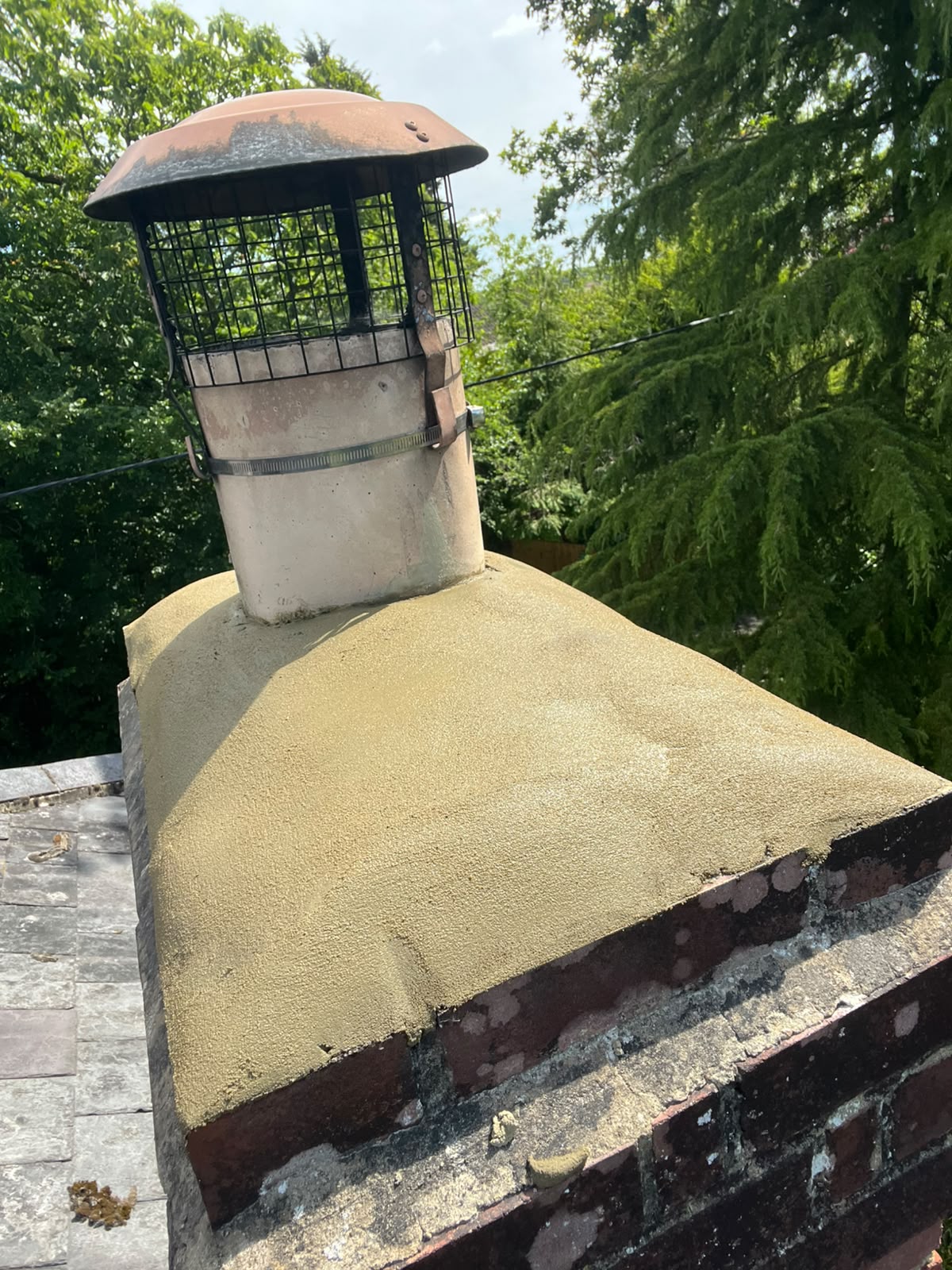
Apron flashings sit at the base of a chimney stack or where a roof slope meets a vertical wall head-on. Unlike step flashings, an apron is typically a single continuous piece of lead dressed over the top course of tiles and turned up the wall face. The critical detail here is the sealant and chase — we never rely on sealant alone to hold an apron. It must be mechanically fixed into a chase cut to the correct depth (minimum 25mm) and the chase must be pointed with a flexible polyurethane sealant, not rigid cement mortar, which will crack with thermal movement and allow water in within a couple of years.
Valley flashings (or valley linings) run down the internal angle where two roof slopes meet. This is a high-flow area — every drop of rain from both slopes converges here, so the lining needs to handle serious water volume. We use code 5 lead (2.24mm thick) for valleys as standard because the heavier gauge resists the erosion from constant water flow and gives a longer service life. Valleys must incorporate expansion joints at no more than 1.5-metre centres to prevent thermal cracking. The most common failure we see in valleys across the older housing stock in Reading, Slough and Maidenhead is lead that was installed in continuous runs without expansion joints — over decades of thermal cycling, the lead fatigues and splits along the centreline.
Secret gutters (or concealed gutters) are essentially wide valley-type linings hidden behind a parapet or between two roof slopes. They are common on Victorian and Edwardian terraces across Greater London and the older parts of Slough. Because they are hidden, they often go unmaintained for years, and when they fail the damage can be severe. A properly formed secret gutter uses code 5 or code 6 lead with drip edges at regular intervals, a minimum fall of 1:80, and overflow weirs as a safety measure. We always recommend installing a visible overflow outlet so that any blockage becomes obvious before it causes internal flooding.
Lead Codes and When to Use Each: Code 3 Through Code 5
Lead sheet is classified by a colour-coded system that indicates its thickness and weight. Understanding which code to specify is essential, because using lead that is too thin will result in premature failure, while using unnecessarily heavy lead wastes money and makes the work harder. Here is what we use and why.
- Code 3 (green, 1.32mm, 14.97 kg/m²) — The lightest code used in roofing. We use code 3 primarily for soakers (the small squares of lead that sit behind step flashings) and for decorative weatherings on sills. It is not suitable for any flashing that will be exposed to direct weather or water flow because it lacks the durability to resist erosion and wind lift over the long term.
- Code 4 (blue, 1.80mm, 20.41 kg/m²) — This is the workhorse of domestic flashings. We use code 4 for step flashings, apron flashings, cover flashings, and any detail where the lead is dressed against a vertical surface. It offers an excellent balance of workability and durability, typically lasting 60-80 years when correctly installed. Building Regulations Approved Document C references BS 6915 for lead work, and code 4 meets the minimum requirements for all standard flashing applications.
- Code 5 (red, 2.24mm, 25.40 kg/m²) — We specify code 5 for valley linings, secret gutters, flat roof coverings, and any area where the lead is horizontal or near-horizontal and subject to standing water or concentrated flow. The extra thickness provides the additional fatigue resistance needed where thermal movement stresses are higher. In our experience across hundreds of properties in Berkshire and Surrey, properly installed code 5 valleys outlast the tiles around them.
We source our lead from reputable UK manufacturers including Associated Lead Mills and Midland Lead, both of whom produce to BS EN 12588 standard. Every roll we use carries the BSI Kitemark, and we can provide material certification on request — something that matters for Building Regulations sign-off and for properties in Conservation Areas where material specifications may be stipulated by the local planning authority.
Common Flashing Failures and Why They Happen
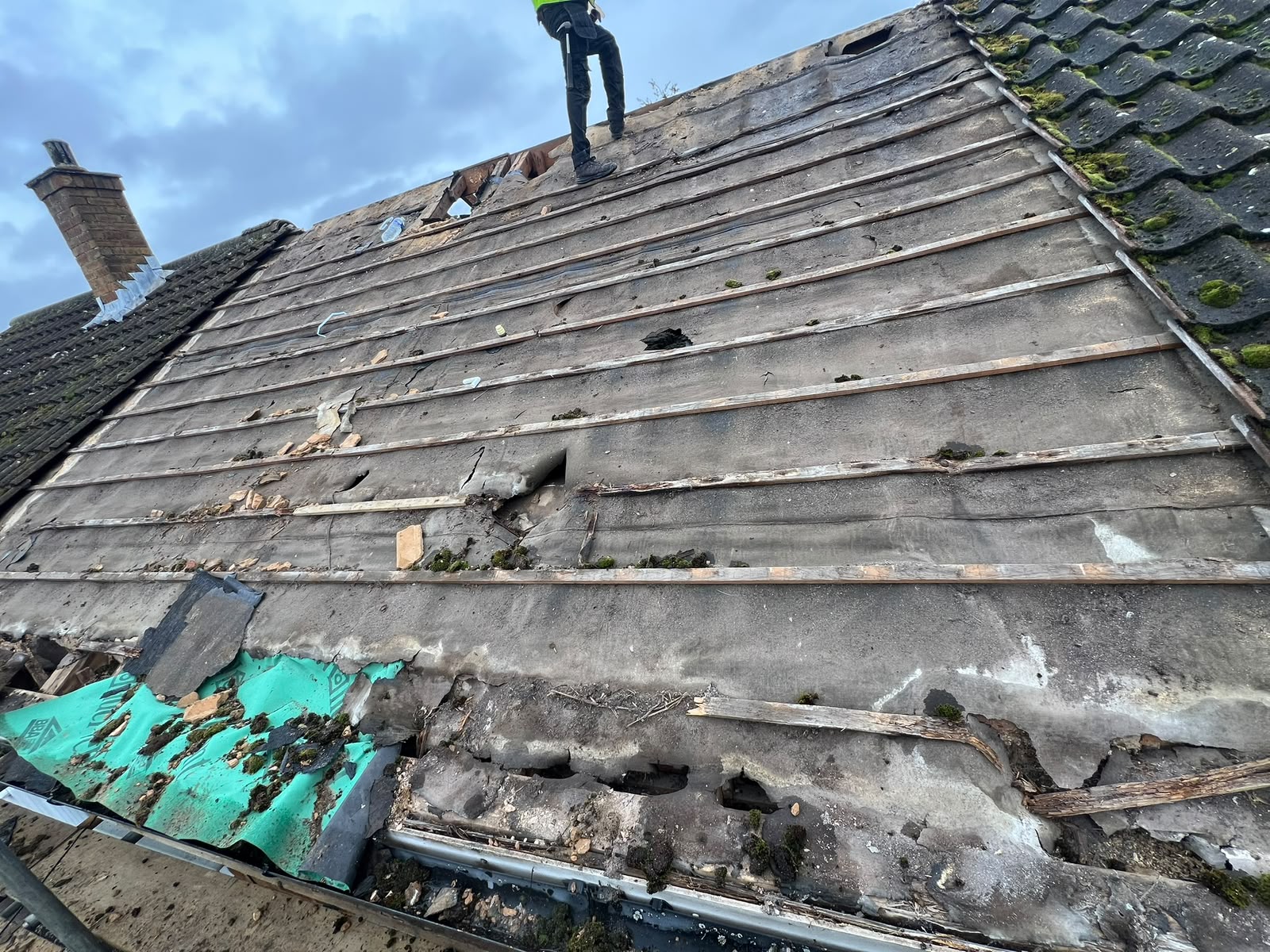
Over the years of working on roofs across Slough, Windsor, Maidenhead and the wider Thames Valley, we have identified a consistent set of reasons why flashings fail. Understanding these helps you spot problems early and, more importantly, helps you ask the right questions when getting quotes for flashing work.
- Mortar pointing instead of flexible sealant — This is probably the single most common failure we see. Flashings chased into brickwork should be sealed with a flexible polyurethane or polysulphide sealant (we use Sika PRO or Dow 791). Cement mortar is rigid and will crack away from the lead as thermal expansion moves the metal. Within three to five years, the mortar falls out, the lead lifts, and water runs behind the flashing and down the wall.
- No expansion joints in long runs — Lead expands by approximately 3mm per metre for every 20°C temperature change. On a south-facing roof in summer, surface temperatures can easily hit 60-70°C. Any lead run longer than 1.5 metres without an expansion joint (a lapped or welted joint that allows movement) will eventually crack from fatigue. We see this constantly in valley linings installed as single continuous sheets.
- Incorrect laps and upstands — A step flashing with only a 50mm overlap instead of the recommended 65mm minimum, or a wall upstand of only 75mm instead of 150mm, might look fine for the first year or two. But in driving rain — the sort of horizontal rain we get regularly across the exposed western flanks of properties in Buckinghamshire and Berkshire — that inadequate overlap lets water past.
- Patching with roof sealant or bitumen tape — We regularly encounter flashings where a previous roofer has simply slathered on roof sealant or stuck on self-adhesive bitumen tape as a quick fix. These products have a place as very temporary emergency measures, but they are not a substitute for proper leadwork. The sealant degrades in UV light, the adhesive fails in heat, and you are usually left with a bigger mess to clean up before the proper repair can be carried out.
If you notice any of these issues on your own roof — damp patches on internal walls near a chimney breast, water stains in the loft space, or visible gaps between lead and brickwork — do not wait for the next downpour to confirm your suspicions. Call us on 07405 391861 for a free inspection. Catching a flashing failure early almost always means a straightforward repair rather than a costly replacement, and it prevents the secondary damage to timbers and plasterwork that makes the eventual bill much higher.
Lead Alternatives: Zinc, Copper and GRP Flashings
While sand-cast lead remains our first choice for most flashing applications — and is specified by default in BS 6915 and the Lead Sheet Association's technical guidance — there are situations where alternative materials are the better option. We work with all of them and will recommend the right material for your specific situation.
Zinc flashings are increasingly popular on contemporary new-build projects and extensions across Surrey and Buckinghamshire. Zinc is lighter than lead (around 70% of the weight for equivalent thickness), has a clean silver-grey finish that weathers to an attractive patina, and is easier to recycle. We use VM Zinc or Rheinzink pre-weathered sheet for most zinc flashing work. The main limitation is workability — zinc is stiffer than lead and does not dress into complex profiles as readily, which makes it less suitable for intricate chimney details on older properties. However, for simple wall abutments, verge flashings and coping weatherings, zinc performs excellently and typically lasts 40-60 years.
Copper flashings are a premium option that we specify primarily for heritage properties and Conservation Area work where the planning authority requires a traditional aesthetic. Copper weathers to the distinctive green verdigris patina over time and has a service life exceeding 100 years. The downside is cost — copper is significantly more expensive than lead, and it requires careful detailing to avoid galvanic corrosion where it contacts other metals or treated timber. We use 0.6mm or 0.7mm copper sheet sourced from KME or Aurubis.
GRP (fibreglass) flashings are a modern alternative that we use in specific situations, particularly on flat roof to wall junctions where a GRP flat roof is already installed. GRP flashings integrate seamlessly with a GRP roof system (such as Topseal or Cure-It) and eliminate the need for a separate material at the abutment. They are also useful in locations where lead theft is a concern — GRP has no scrap value and therefore does not attract thieves, which can be a genuine issue on unoccupied or commercial properties.
Whichever material we recommend, we always explain our reasoning in plain terms during the survey. Our goal is to provide a flashing solution that performs faultlessly for decades, suits the aesthetic of your property, meets all relevant Building Regulations, and represents genuine value for the investment.