The complete guide to fascias and soffits
What fascias and soffits actually do
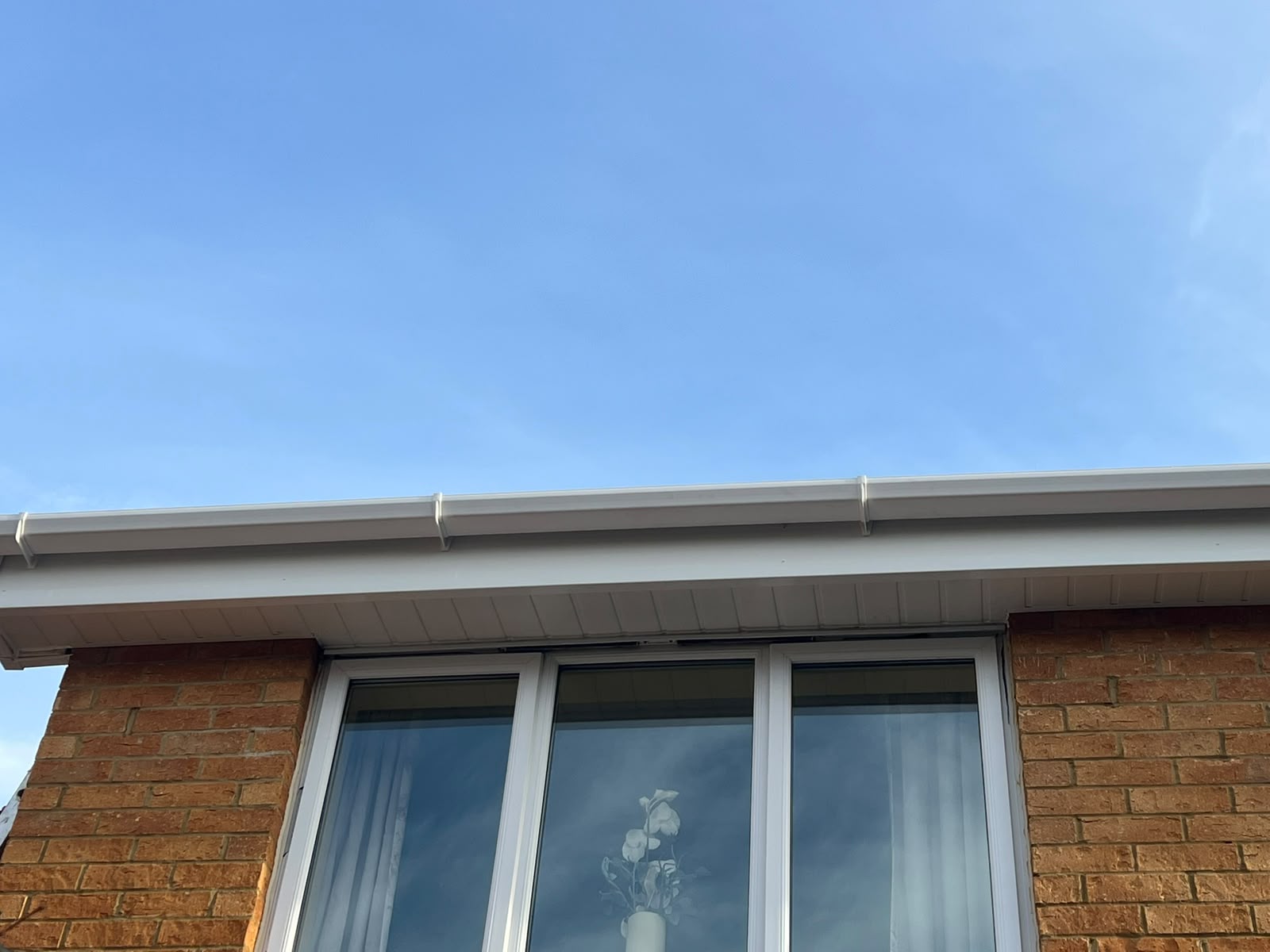
The fascia board is the long, straight board that runs along the lower edge of the roof, mounted directly to the ends of the rafters or trusses. It serves two critical functions: it provides a fixing surface for the guttering brackets, and it seals the gap between the roof edge and the external wall, preventing wind-driven rain, birds and insects from entering the roof space. On most UK homes, the fascia is the most visible element of the roofline and has a significant impact on the property's kerb appeal.
The soffit board is the horizontal board that bridges the gap between the bottom edge of the fascia and the face of the external wall. It encloses the underside of the roof overhang (the eaves) and provides a neat, finished appearance. Critically, the soffit also provides ventilation to the roof space — either through perforations in the board itself (vented soffits) or through dedicated ventilation strips set into the board. This ventilation is essential for preventing condensation in the loft, which can lead to timber rot, mould growth and degradation of insulation materials.
Together, the fascia and soffit form the roofline — the finished edge detail where the roof meets the wall. They work in conjunction with the guttering to manage rainwater, protect structural timbers and maintain the building envelope. When any element of the roofline fails, it compromises the others: a rotten fascia cannot hold gutter brackets securely, a damaged soffit allows moisture-laden air to bypass the ventilation system, and failed guttering directs water onto fascias that were never designed to handle it.
Understanding what these components do helps explain why replacing them properly matters. A roofline replacement is not just a cosmetic upgrade — it is a functional repair that protects the structural integrity of your roof edge and the environmental conditions inside your loft space.
uPVC versus timber roofline
The vast majority of UK homes built before the 1990s have timber fascias and soffits. These are typically made from softwood — usually redwood or whitewood — primed and painted during construction. When properly maintained with regular repainting every three to five years, timber roofline can last 30 years or more. In practice, however, few homeowners keep up with the painting schedule, and once the paint system breaks down, the timber is exposed to moisture and begins to rot.
Timber rot on roofline boards follows a predictable pattern. It starts at the bottom edge of the fascia, where rainwater runs off the gutter and sits on the timber. It then spreads upwards and backwards, eventually reaching the rafter feet that the fascia is nailed to. By the time the rot is visible from the ground — soft, dark patches, flaking paint, fascia pulling away from the rafters — it has usually been developing for years. Rotten rafter feet are a common finding when we strip old timber fascias, and repairing them adds time and cost to the job.
uPVC roofline boards were introduced in the UK in the late 1980s and are now the default choice for new builds and replacement work. Modern uPVC boards are manufactured from a rigid, UV-stabilised compound that does not rot, does not need painting, and maintains its appearance with minimal effort. Quality boards from manufacturers like Swish, Freefoam and Eurocell carry product warranties of up to 20 years and have a realistic service life of 25 to 30 years.
The main criticism of uPVC is that it does not have the same traditional appearance as painted timber. This is a valid point on period properties and in conservation areas where the roofline is a visible architectural feature. However, modern uPVC is available in convincing woodgrain finishes — rosewood, golden oak, mahogany and others — that replicate the look of stained timber remarkably well. For most suburban homes, the aesthetic difference is minimal and the practical advantages of zero maintenance are overwhelming.
We install both uPVC and timber roofline depending on the client's preference and the requirements of the property. For period homes, listed buildings and conservation areas where timber is required, we use pre-treated, slow-grown softwood or hardwood, properly primed and painted with a high-quality exterior system. For everything else, we recommend uPVC for its combination of durability, low maintenance and value.
- Timber — traditional appearance, requires painting every 3–5 years, 30+ year life if maintained
- uPVC — zero maintenance, 25–30 year life, wide range of colours and woodgrain finishes
- Timber rot starts at the fascia base and spreads to rafter feet — often hidden until strip-out
- Woodgrain uPVC (rosewood, golden oak) gives a traditional look without the upkeep
- Listed buildings and conservation areas may require timber — we advise on requirements
Signs your fascias and soffits need replacing
Roofline deterioration is gradual and often goes unnoticed until it is well advanced. Here are the key indicators that your fascias and soffits are due for replacement, roughly in order from early warning signs to urgent issues.
Flaking or peeling paint is the first sign of trouble on timber roofline. Once the paint film breaks down, moisture gets into the timber and the deterioration accelerates. If the paint is peeling on sections of your fascia, the underlying timber is almost certainly starting to absorb water, even if it still feels firm when you press it. This is the ideal time to act — replacement now prevents the rot from spreading to rafter feet and other structural timbers.
Discoloration on uPVC boards — typically yellowing on white boards or greying on coloured boards — indicates UV degradation. The material is losing its plasticiser and becoming brittle. This is primarily a cosmetic issue in the early stages, but brittle uPVC is vulnerable to impact damage from wind-blown debris, hailstones or even bird strikes, and cracked boards allow water behind the roofline.
Visible rot on timber fascias appears as soft, dark patches that you can push a screwdriver into. By this stage, the rot is well established and the board needs replacing. Check particularly at the bottom edge of the fascia, around gutter bracket fixings (where water tends to pool), and at joints where end-to-end boards meet. Rot at joints often indicates that the original joint was not properly sealed or primed.
Gaps between the soffit and the wall, or between the fascia and the roof covering, indicate that boards have shrunk, warped or pulled away from their fixings. These gaps allow birds, wasps and other creatures to enter the roof space, and they also compromise the ventilation design — uncontrolled air ingress in the wrong places can create cold spots and condensation in the loft.
- Flaking paint — early warning on timber, act now to prevent rot spreading
- uPVC discolouration — UV degradation making boards brittle and vulnerable
- Soft, dark patches — established timber rot requiring board replacement
- Gaps at joints or edges — boards shrunk, warped or pulled from fixings
- Birds or wasps entering at the eaves — indicates failed soffits or missing ventilation
Ventilation requirements for roof spaces
Adequate roof-space ventilation is a Building Regulations requirement under Approved Document F (Ventilation) and is also addressed in Approved Document C (Site Preparation and Resistance to Moisture). The purpose is to prevent condensation forming in the loft space, which can lead to timber rot in roof timbers, degradation of insulation, and mould growth — all serious and expensive problems.
For a typical pitched roof with insulation at ceiling level, the regulations require a continuous ventilation gap equivalent to a 10mm opening along both eaves. This is usually achieved through vented soffit boards — uPVC boards with a pattern of small holes or slots that allow air to flow into the roof space while keeping out insects and debris. The air enters through the soffit vents, rises through the loft (driven by the stack effect — warm air rises) and exits through ridge tiles, tile vents or other high-level openings.
When we replace soffits, we always ensure the ventilation provision meets or exceeds the regulatory minimum. On properties where the existing soffits were solid (unvented) — which is common on older homes where roofline was installed before current regulations — we upgrade to vented boards as a matter of course. This is one of the most valuable aspects of a roofline replacement: bringing the roof-space ventilation up to modern standards, which reduces condensation risk and helps maintain a healthy, dry loft environment.
For properties with room-in-the-roof construction (habitable loft conversions), the ventilation requirements are different and more complex. A 50mm clear air gap above the insulation between the rafters is required, with ventilation at the eaves and at the ridge or high level. We work with the existing roof construction to ensure any soffit replacement maintains the required ventilation path, and we advise where additional ventilation may be needed.
- Building Regs require continuous 10mm equivalent ventilation at both eaves on standard pitched roofs
- Vented soffit boards are the most common and effective solution
- Upgrading from solid to vented soffits is standard practice during roofline replacement
- Room-in-roof construction has additional ventilation requirements above rafter insulation
- Proper eaves ventilation reduces condensation, timber rot and mould in the loft space