Understanding Chimney Repointing: A Comprehensive Guide
Lime Mortar vs Cement Mortar: The Critical Distinction
If there is one thing every homeowner should understand about chimney repointing, it is the difference between lime mortar and cement mortar. Using the wrong type is not just a cosmetic issue — it can cause serious, irreversible damage to your brickwork and significantly shorten the life of your chimney stack.
Lime mortar has been used in construction for thousands of years. It is softer and more flexible than cement mortar, which gives it two critical advantages for chimney work. First, it allows moisture to evaporate through the mortar joints rather than being trapped inside the brickwork. Chimneys get wet — there is no avoiding it — and this moisture needs an escape route. With lime mortar, the joints act as the chimney's breathing mechanism, wicking moisture outward where it evaporates harmlessly. Second, lime mortar is sacrificial — it is designed to be softer than the bricks, so that weathering degrades the mortar rather than the bricks. Mortar is far cheaper and easier to replace than bricks.
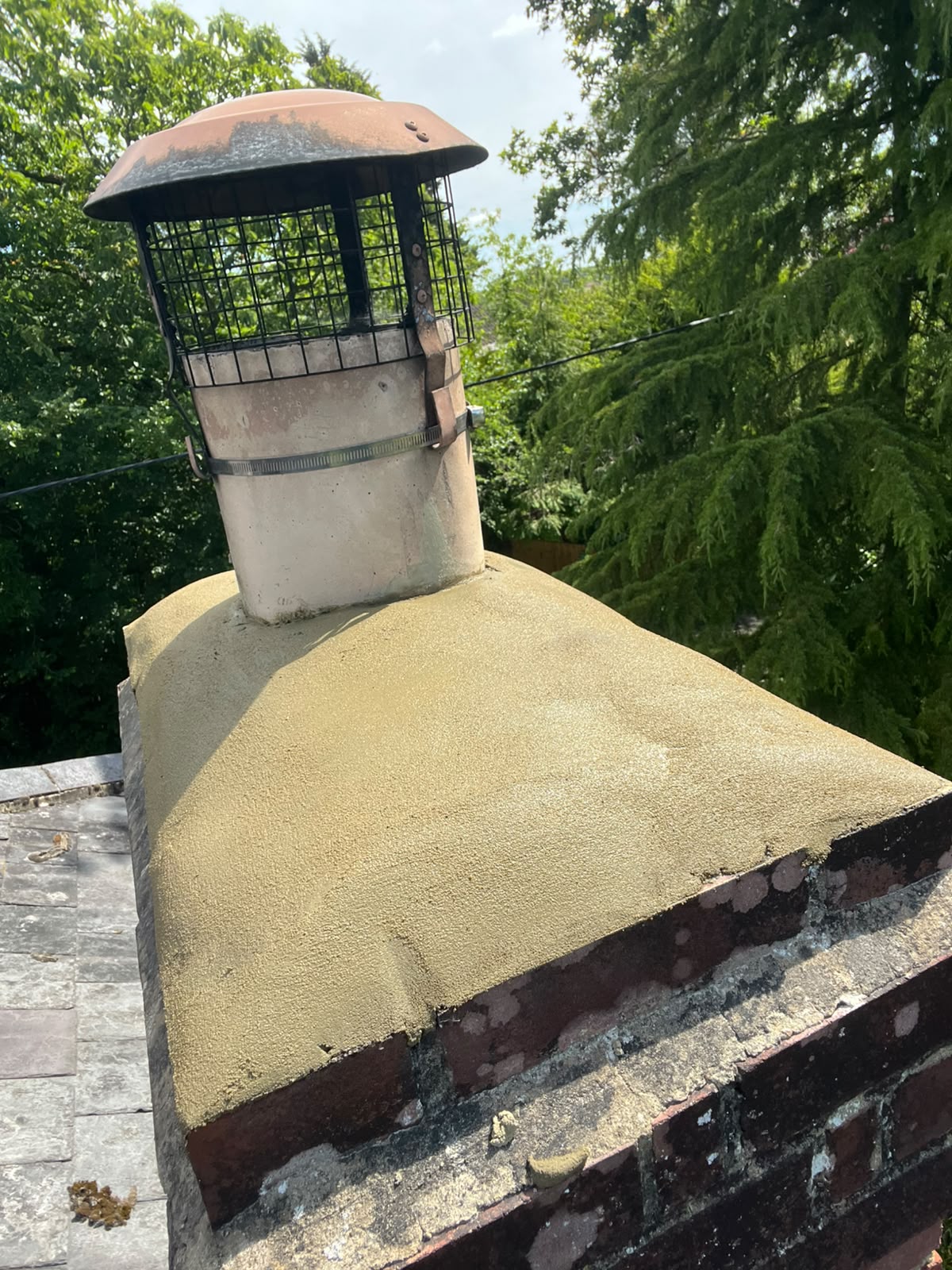
Cement mortar, by contrast, is significantly harder and less permeable than lime mortar. When used on older, softer bricks — particularly the handmade stocks and soft reds found on chimneys built before the 1930s across Berkshire and Surrey — cement mortar traps moisture inside the bricks. This trapped moisture then freezes in winter, expanding and blowing the face off the bricks (spalling). Over a few winters, the bricks can be destroyed while the cement mortar remains intact. We have seen countless chimneys across Slough, Windsor, Maidenhead, and Reading where well-intentioned cement repointing has caused more damage than the original failed lime mortar ever did.
The rule of thumb is straightforward: if your chimney was built before approximately 1930 and uses soft, handmade bricks, it almost certainly needs lime mortar. If it was built after the war using denser machine-made bricks, cement mortar is usually acceptable. If you are unsure, we can assess the brickwork and advise you during our free inspection.
- Pre-1930s chimneys with soft bricks: use NHL lime mortar or hot-mixed lime putty
- Post-war chimneys with dense bricks: cement-lime-sand mortar is usually suitable
- Never use pure cement mortar (no lime) on any chimney — it is far too hard and impermeable
- Beware of builders who use one mortar mix for everything — the specification must match the brick
Identifying Failed Mortar Joints
Knowing when your chimney needs repointing can save you significant expense by catching the problem before water damage reaches the inside of your home. The good news is that many signs of mortar failure are visible from ground level with binoculars, or you may spot the consequences inside the property before noticing the chimney itself.
The earliest sign is mortar recession — the mortar has weathered back from the face of the bricks, creating a visible groove between each course. At this stage, the joints are still intact but thinning, and repointing is advisable but not yet urgent. The next stage is visible cracking within the mortar joints, particularly along the interface between mortar and brick. Once cracks form, water can penetrate the joint during driving rain, and freeze-thaw action will rapidly widen the cracks over subsequent winters.
More advanced deterioration shows as missing mortar — sections where the joint is open or filled only with loose sand and fragments. At this point, water is freely entering the chimney stack, and you may notice damp patches on the chimney breast inside, particularly during or after heavy rain. In severe cases, you may see vegetation growing from the joints — moss, grass, or even small plants establishing root systems in the decayed mortar. If plants are growing in your chimney, repointing is overdue.
Another telltale sign is mortar debris in the gutter or on the ground around the base of the chimney. If you find small fragments of sandy mortar accumulating after windy weather, the chimney joints are actively deteriorating. We recommend acting on these signs promptly — the cost of repointing a chimney before water damage occurs is a fraction of the cost of repointing plus repairing the internal damp damage afterwards.
Colour Matching and Finish Profiles
A well-repointed chimney should be virtually indistinguishable from the original work. Achieving this requires careful attention to three factors: mortar colour, aggregate texture, and joint profile. Many homeowners in Buckinghamshire and Greater London have experienced the frustration of having a chimney repointed with mortar that is the wrong colour or has been finished with a profile that looks out of place — and once cement mortar has cured, it is extremely difficult to correct.
Mortar colour is determined primarily by the sand used in the mix. Different quarries produce sands of different colours — from yellow and buff to red, brown, and grey. By sourcing sand from the same region as the original mortar, or by blending sands, we can achieve an accurate colour match. For lime mortars, we can also add natural pigments to fine-tune the colour. We always make up sample panels and compare them against the existing mortar in different lighting conditions before committing to the full chimney.
The joint profile — the way the mortar is finished between the bricks — also has a significant impact on the appearance of the chimney. Common profiles include flush, bucket-handle (concave), weatherstruck, and recessed. We match the profile of the existing work, or in cases where the original profile has been lost, we select the most appropriate profile for the age and style of the building. For heritage properties in conservation areas across Berkshire and Surrey, getting the profile right is especially important and may be specified by the local planning authority.
We take pointing seriously because details matter. A chimney that has been repointed with skill and care blends seamlessly with the original building and adds value to the property. A chimney that has been repointed carelessly — with the wrong colour, the wrong profile, or mortar smeared across the brick faces — detracts from the appearance of the entire property. Our team understands this distinction, and we take pride in delivering repointing work that is technically excellent and aesthetically invisible.
Repointing Heritage Chimneys
Working on listed buildings and properties in conservation areas across Berkshire, Surrey, and Buckinghamshire requires a particular set of skills, knowledge, and sensitivities. The mortar specification, application technique, and finish must all be appropriate to the period of the building, and in some cases, specific consent from the local conservation officer may be required before work can begin.
For Georgian and early Victorian chimneys, we typically use hot-mixed lime putty mortar — a traditional formulation where quicklime is slaked and mixed with sharp sand to produce an exceptionally workable, breathable mortar that closely replicates the original. This type of mortar takes longer to cure than hydraulic lime or cement, but it produces the most authentic result and is the most sympathetic to the very soft bricks found on buildings from this era.
For later Victorian and Edwardian chimneys, NHL (natural hydraulic lime) mortar is usually the most appropriate specification. NHL mortars set through a combination of hydraulic reaction and carbonation, giving them more initial strength than pure lime putty while retaining the breathability and flexibility that older brickwork requires. We use NHL 2 or NHL 3.5 depending on the exposure and brick hardness, blended with local sand for colour matching.
Throughout the process, we document the condition of the chimney before, during, and after the work with detailed photographs. For listed buildings, we provide a method statement before commencing work and can prepare heritage impact assessments if required by the local authority. Our experience with period properties means we understand the importance of getting it right — both for the preservation of the building and for compliance with Listed Building Consent requirements.