Home Services Locations About Us Reviews Blog Reviews Contact

Chimney Cowl & Cap Fitting in Slough & Berkshire

Protect your chimney from rain, birds, and downdraught with the right cowl or cap — professionally fitted by Dripstop Roofing across Berkshire, Surrey, Buckinghamshire, and Greater London.

The Right Chimney Cowl or Cap for Every Flue

An unprotected chimney pot is an open invitation for rain, nesting birds, debris, and cold downdrafts. Whether your chimney serves an active fire, a gas appliance, or sits unused, fitting the correct cowl or cap is one of the simplest and most cost-effective ways to protect your flue, prevent damp, and improve your chimney's performance.

At Dripstop Roofing, we supply and fit a full range of chimney cowls and caps to properties across Slough, Berkshire, and the wider Home Counties. From simple bird guards and rain cowls to specialist anti-downdraft designs and approved gas flue terminals, we match the right product to your specific chimney and its usage. Every installation is carried out professionally, with attention to the flaunching, pot condition, and flue requirements — not just the cowl itself.

Since 2020, we have fitted hundreds of chimney cowls across the region, resolving problems ranging from persistent bird nesting in Victorian terrace chimneys to chronic downdraught issues on exposed hilltop properties in the Chilterns and Surrey Hills. We know which cowls work best in which situations, and we will always advise you honestly on the most effective and economical solution for your chimney.

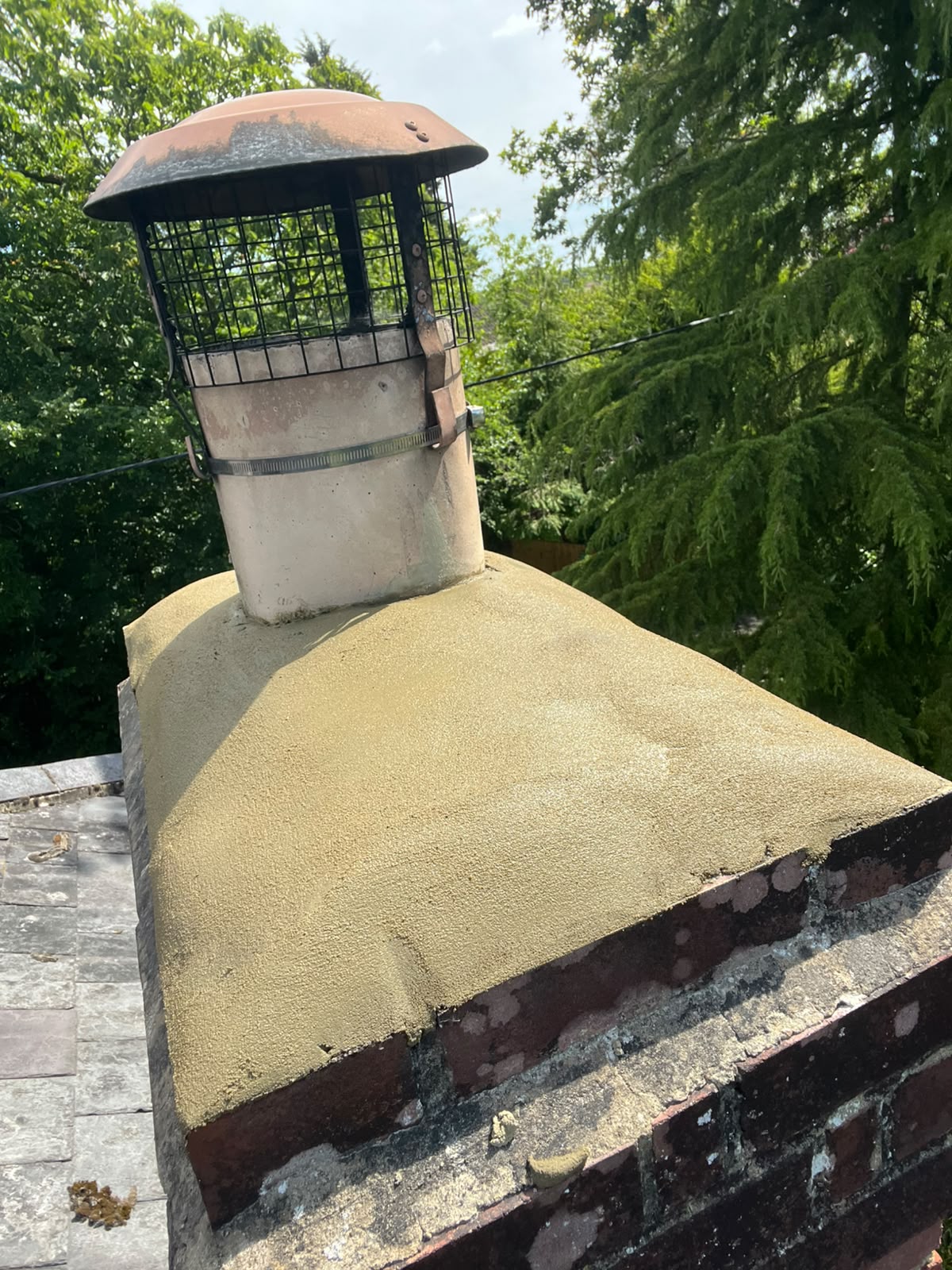
Chimney cowl fitting in Berkshire
What we offer

Cowl & Cap Solutions for Every Chimney

Bird Guard Cowls

Stainless steel mesh cowls that prevent jackdaws, pigeons, and starlings from nesting in your flue while allowing smoke and gases to escape freely.

Rain Cowls

Purpose-designed cowls that deflect rainwater away from the flue opening, preventing water from running down the chimney and causing internal damp problems.

Anti-Downdraft Cowls

Aerodynamic cowls that use wind direction to create upward draw, eliminating the smoke blowback and cold draughts that plague exposed or sheltered chimneys.

Gas Flue Terminals

Building Regulations-approved terminals for gas fire and boiler flues, ensuring safe dispersal of combustion gases while preventing rain ingress.

Ventilating Caps

Capped covers with built-in ventilation slots for disused chimneys, preventing rain and bird entry while allowing enough airflow to prevent condensation and damp.

Pot & Flaunching Repairs

We check and repair chimney pots and flaunching as part of every cowl fitting, ensuring a secure foundation and watertight seal around the base of the cowl.

Your Guide to Chimney Cowls, Caps & Terminals

Types of Chimney Cowls and When You Need Each One

The range of chimney cowls available can be bewildering, but the choice becomes straightforward once you understand what each type does and which chimney situation it is designed to address. Here is our practical guide to the main cowl types and their applications, based on our experience fitting cowls across Slough, Reading, Windsor, Maidenhead, and the surrounding areas.

Bird guard cowls are the most commonly fitted type across Berkshire and Greater London. They feature a metal cage — usually stainless steel or galvanised mild steel — that surrounds the flue opening with a mesh small enough to prevent birds from entering but large enough to allow smoke and gases to pass freely. Jackdaws are the main offenders in this area, as they are prolific nest builders and will quickly block a flue with sticks and debris. A bird guard is essential for any chimney that is open at the top, whether in active use or not. We recommend stainless steel guards for longevity, as galvanised versions corrode within five to ten years in an exposed chimney position.

Rain cowls add a hood or deflector above the pot opening to prevent rain from entering the flue. Some designs combine rain protection with bird exclusion in a single unit. Rain cowls are particularly useful for chimneys that serve unused fireplaces where rain runs down the flue and causes damp staining on the chimney breast. They are also beneficial for chimneys serving open fires, where heavy rain can saturate the fire bed and make the fireplace unusable for days afterwards.

Anti-downdraft cowls are specialist products designed to solve the specific problem of wind blowing down the chimney. This is a common issue on chimneys that are shorter than the surrounding roofline, in sheltered positions where turbulence occurs, or on properties exposed to strong prevailing winds. The most effective designs — such as the Colt Cowl Top, the H-type cowl, and the Lobster Back cowl — use aerodynamic principles to redirect wind into upward draw regardless of direction. We have resolved persistent downdraft problems on properties across Surrey and Buckinghamshire with these cowls where other solutions had failed.

Gas Flue Terminal Regulations

If your chimney serves a gas fire or gas boiler, fitting the correct flue terminal is not optional — it is a legal requirement under Building Regulations Approved Document J, and the installation must comply with the gas appliance manufacturer's instructions. Using the wrong terminal, or fitting a generic cowl on a gas flue, can be dangerous and may invalidate your home insurance.

Gas flue terminals are purpose-designed to allow the safe dispersal of combustion products (primarily carbon monoxide and water vapour) while preventing rain, debris, and birds from entering the flue. They are typically made from stainless steel or aluminium alloy and are designed to maintain adequate flue draw for the appliance they serve. Different gas appliances — open-flued fires, balanced flue boilers, fan-assisted flues — require different terminal types, and the terminal must be correctly sized for the flue diameter.

We always check what appliance is connected to the flue before recommending or fitting any terminal. If you are unsure whether your existing terminal is correct for your gas appliance, we can inspect it and advise. This is particularly important if you have recently changed your gas fire or if a cowl was fitted by a previous owner without regard to the gas regulations. Getting this right is a safety matter, and we take it seriously on every installation across Berkshire and the surrounding counties.

When You Can Fit a Cowl Without Scaffolding

One of the most common questions homeowners in Slough and the surrounding areas ask is whether a chimney cowl can be fitted without the expense of scaffolding. The answer depends on several factors: the height and position of the chimney, the condition of the chimney pot and flaunching, the type of cowl being fitted, and the available access from inside the loft or from the roof.

For single-storey extensions, bungalows, or chimneys accessible from a low roof slope, we can often fit a cowl from a roof ladder without scaffolding. Similarly, some chimney pots can be accessed from the loft hatch if the flue is lined and the pot is simply sitting in position. In these cases, the cost of fitting is significantly lower — often just the price of the cowl itself plus an hour or two of labour.

However, if the chimney requires any repair work — flaunching renewal, pot resetting, repointing around the cowl base — scaffolding is almost always necessary to do the job safely and properly. Working at height on loose mortar with a cowl in one hand and a trowel in the other is not safe from a ladder. We always prioritise safety, and we will be upfront about whether scaffolding is needed. Where scaffolding is required, we often recommend combining the cowl fitting with any other chimney maintenance that is due — repointing, flaunching, or flashing repairs — to make the most of the scaffold erection cost.

We serve the whole region and can usually provide a free assessment to determine the best access method for your specific chimney. Call us on 07405 391861 to arrange a visit.
How we work

Our process

Assessment & Advice

We inspect your chimney, identify which flues are active and which are disused, check pot and flaunching condition, and recommend the most suitable cowl or cap type for each pot.

Product Selection

We source the correct cowl from quality UK manufacturers — stainless steel bird guards, approved gas terminals, or specialist anti-downdraft units — matched to your specific chimney pots.

Professional Fitting

Our team fits the cowl securely, repairs any flaunching or pot issues, and ensures the installation is stable, weatherproof, and compliant with Building Regulations where applicable.

Testing & Handover

For active flues, we test the draw to confirm the cowl is performing correctly. You receive product documentation, our workmanship guarantee, and advice on any future maintenance.

Chimney Cowl & Cap Costs

Chimney cowls and caps are one of the most affordable chimney improvements you can make. Below are typical fitted prices across Slough, Berkshire, and the surrounding area. All prices include the cowl, fitting labour, and minor flaunching repairs where needed.

ServiceTypical CostTimeframe
Bird guard (stainless steel, fitted)£60 – £1201–2 hours
Rain cowl (fitted)£80 – £1501–2 hours
Anti-downdraft cowl (fitted)£100 – £2002–3 hours
Gas flue terminal (approved, fitted)£80 – £1501–2 hours
Ventilating cap (disused flue)£70 – £1301–2 hours
Multiple cowls (per additional cowl)£40 – £80 each30 mins each

Prices are estimates based on typical UK projects. Actual costs vary by property, access, and materials. We provide free, detailed quotes.

Chimney cowl installed on a Berkshire property

Small Investment, Big Protection — Cowl Fitting by Dripstop Roofing

A chimney cowl is one of the simplest upgrades you can make to protect your home from water ingress, bird nesting, and performance issues with your fire or stove. For a relatively modest investment, you gain years of trouble-free chimney operation and avoid the far greater cost of dealing with blocked flues, damp repairs, or dangerous gas terminal problems.

At Dripstop Roofing, we have been fitting chimney cowls and caps across Slough, Berkshire, Surrey, Buckinghamshire, and Greater London since 2020. We use only quality products from reputable UK manufacturers, and we always check the condition of your pots and flaunching while we are up there — because fitting a cowl on a crumbling pot is a waste of your money.

Call 07405 391861 today for a free chimney cowl assessment and quote. We will advise you honestly on what you need, what you do not need, and the most cost-effective way to protect your chimney. No obligation, no pressure — just straightforward advice from local chimney specialists who know what works.

Common questions

Frequently Asked Questions

What is the difference between a chimney cowl and a chimney cap?

A cowl sits on top of a chimney pot and allows continued use of the flue — whether for ventilation, an open fire, or a gas appliance. A cap covers the entire chimney pot opening or the stack top, sealing it against rain and birds. Caps are typically used on permanently disused flues where no ventilation is required.

Do I need a cowl on my chimney?

If your chimney is unused but the flue is open, a ventilating cowl prevents rain entry and bird nesting while maintaining airflow to prevent damp and condensation in the flue. If you use a wood burner or open fire, a rain cowl or anti-downdraft cowl improves performance. Gas flues require a specific approved terminal.

What type of cowl stops birds nesting in my chimney?

A bird guard cowl features a mesh cage around the flue opening that allows smoke and gases to escape while preventing jackdaws, pigeons, and other birds from entering. We fit stainless steel bird guards that are durable and easy to maintain. We also remove existing nests before fitting the guard.

Can a cowl fix chimney downdraught problems?

Yes. Anti-downdraft cowls such as the Colt Cowl or H-type cowl are specifically designed to prevent wind from blowing down the flue. They use aerodynamic vanes or hoods that redirect airflow upward regardless of wind direction. They are very effective on exposed chimneys in Berkshire and Surrey.

Do I need a special terminal for a gas fire flue?

Yes. Gas appliances require a purpose-designed flue terminal that complies with Building Regulations and the manufacturer's instructions. The terminal must allow combustion gases to disperse safely and prevent rain entry. Only approved terminals should be used, and installation should be carried out by a competent person.

How much does it cost to fit a chimney cowl?

A basic bird guard costs between 60 and 120 pounds fitted. Rain cowls range from 80 to 150 pounds. Anti-downdraft cowls are typically 100 to 200 pounds fitted. Prices include the cowl, fitting, and any minor flaunching repairs needed. If scaffolding is required, this is quoted separately.

Can you fit a cowl without scaffolding?

In some cases, yes. If the chimney is accessible from a roof ladder and the pot is in good condition, we can fit a cowl without full scaffolding. However, if the flaunching needs repair or the pot is loose, scaffolding provides the safe, stable platform needed to do the job properly.

Will a chimney cap cause damp in the chimney breast?

If a chimney is capped without any ventilation, moisture can become trapped inside the flue, leading to condensation and damp patches on the chimney breast. This is why we always recommend ventilating caps or cowls rather than solid caps, unless the flue has been fully sealed at every level inside the property.

Get started

Protect Your Chimney — Get a Free Cowl Fitting Quote

Contact Dripstop Roofing for expert chimney cowl and cap advice. Serving Slough, Berkshire, Surrey, Buckinghamshire, and Greater London.

Get Free Quote